Cowbells (In Memory of Tatjana Pavlovic)
*Por Roberto Carlos Ortiz
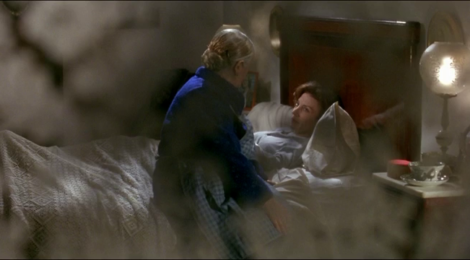
Masthead: The Flower of My Secret (Almodóvar, 1995)
In the last scene of All About my Mother (Pedro Almodóvar, 1999), the dramatic actress Huma Rojo (Marisa Paredes) leaves her dressing room ready to enter the stage. A close-up shows her at the door as she turns her head towards the camera, says “I’ll see you later” and then turns again to exit the frame. Huma is addressing her friend Manuela (Cecilia Roth), who has spent most of the movie processing in silence the death of her son Esteban when he turned 17. Shortly before, Manuela had seen Esteban’s photo on Huma’s dressing room mirror, between a photo of her (ex)lover Nina and the actress Bette Davis. Huma explains to Manuela that she had the photo “in storage” after the death of Esteban’s father, but Manuela asks her to keep it. Huma is moved, although she really didn’t know him and the photo doesn’t add much information: it shows the face of a young white man whose look to the camera lends itself to different interpretations. The final “see you later” remains a pending matter, since the plot ends there.
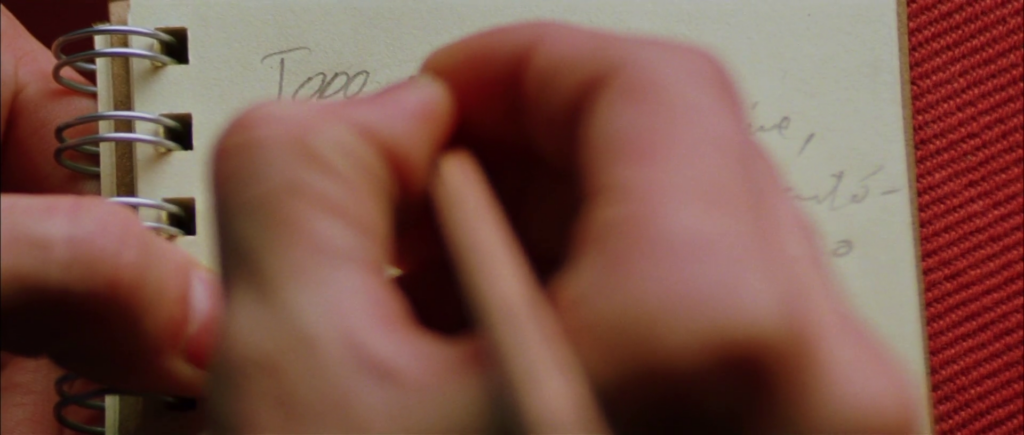
All About My Mother (Almodóvar, 1999)
At the end of Volver (Almodóvar, 2006), the feisty and sensual Raimunda (Penélope Cruz) anxiously leaves her house to see her mother Irene (Carmen Maura) at her neighbor’s house. Reunited in the same frame, with their profiles to the camera, Raimunda tells Irene that she has many things to tell her and her mother responds: “I’m desiring that you tell me everything, but leave now. We’ll see each other every day, we’ll manage between us.” After parting, Irene walks alone down the hall of the house where she will care for her dying neighbor, with whom she has another pending conversation. At the beginning of the movie, Raimunda has spent almost four years mourning the death of her parents (though her mother turns out to be alive). Afterwards, Raimunda loses her husband and her maternal aunt on the same day, in very different circumstances and places. However, the plot turns and family revelations with doses of humor can make you overlook that Raimunda is also processing conflicting feelings about the dead.
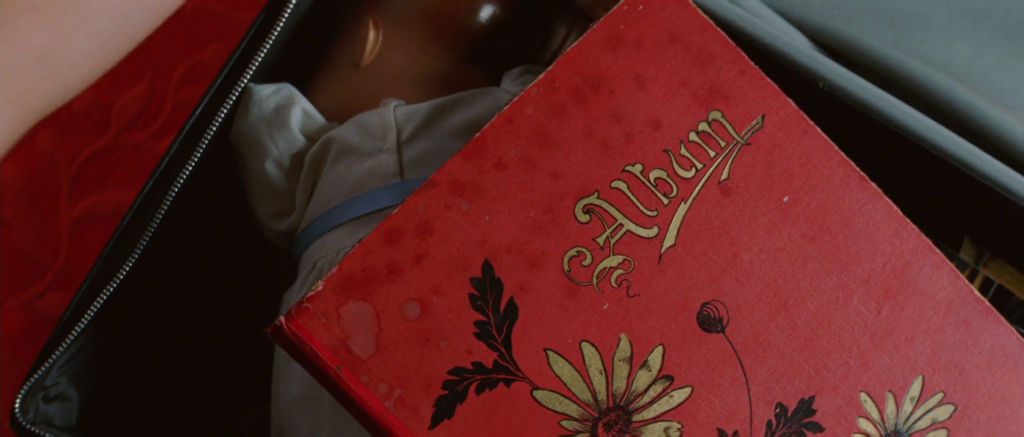
Volver (Almodóvar, 2006)
There is a vast bibliography about the films of Pedro Almodóvar that draws on every possible critical theory. However, I’m not interested in engaging with it right now. I returned to these films earlier this year for personal reasons, after deciding to ask former Tulane University colleagues to contribute to a brief homage in memory of our dear friend and professor Tatjana Pavlovic, who had recently passed away. The two movies hit differently when I rewatched them because, among other things, the plots of All About My Mother and Volver deal with women in mourning and their final scenes leave the spectator with the wish to see each other again and talk.
Manuela’s history in All About My Mother is framed by intimate conversations – mother and son in an apartment, a trio of girlfriends in a dressing room – about memories, motherhood and actresses. Raimunda’s story in Volver is framed by relationships to death: at the start the women from a Spanish village congregate to take care of their family tombs and at the end a fake ghost (the mother) takes care of a neighbor dying of cancer. Manuela and Raimunda cannot process their grief in isolation or with only one friend, lover or relative. They need and find support in a community of friendships (recent or not) and family members (biological and chosen ones), of imperfect women of diverse age, gender and sexuality (however, being Almodovar movies, there is no racial diversity).
The collaborations collected here reflect just a small part of the community of colleagues and friends linked together by Tatjana Pavlovic during her years as a professor at Tulane University. The authors come from different countries (Brazil, Chile, Ecuador, USA, Puerto Rico, Mexico) and have taken different routes. Some remained in touch with her while others were distanced by life. Some hung out with her only in New Orleans, while others traveled with her to other parts. Despite the differences and distances, Tatjana reunites us again to remember her.
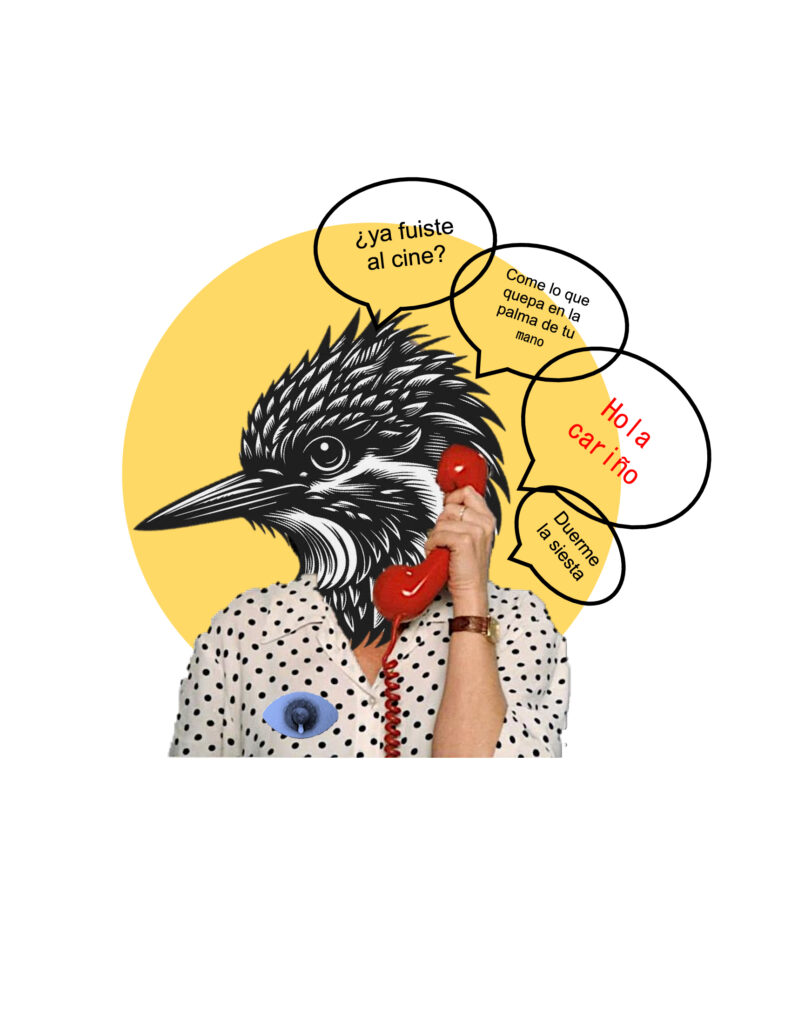
Tati 1 (collage by Alejandra Osorio Olave, 2025)
I was in Mexico City when I got the news of Tatjana’s passing. I left my room early at night to work, as usual. It was a cold early December night and no one around me knew her or were part of my academic past. How could I communicate to them what her loss meant? Tatjana was such a charismatic woman who projected confidence and good humor that it is easy to overlook that she didn’t fit traditional molds: eternally boyish-looking, intellectual, lesbian, multilingual, observant, strong-minded. Tatjana was a perceptibly foreign (Croatian) white woman with a noticeable accent when she spoke to us in Spanish or English. I, like others, thought she was fascinating and cool, but many people don’t look or understand the world in the same way.
We first met at the university, but we got to know each other well when, after her daily nap, Tatjana would ride her mountain bike to the Rue de la Course coffee shop at the corner of Magazine street (the “big Rue”). The coffee was bitter and expensive, the baristas could be unfriendly and one left the place smelling of cigarette smoke, but they had square wood tables that were excellent to sit down to study and people watch. We saw each other regularly and one afternoon she surprised me by offering to hire me as a research assistant. Despite having very different personalities, a friendship developed from our work sessions at the café.
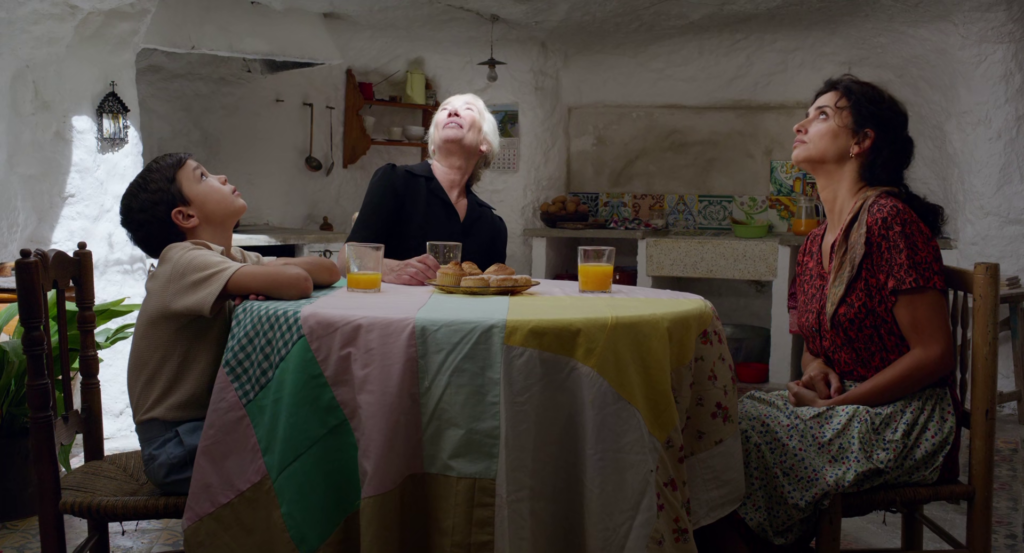
Pain and Glory (Almodóvar, 2019)
Tatjana had the gift of making a recent or superficial acquaintance feel like they had a close relationship. Despite her taste for Pedro Almodóvar melodramas, when I got dramatic sharing a problem, she responded with pragmatic advice and told me to get over it and move on. Tatjana was amused by the excesses of pop culture, like the songs of Raffaella Carrà, but she was known for her minimalism. Her easygoing manner belied how disciplined she was. When we worked together or shared a table to work separately at the café, Tatjana kindly imposed a strict division of time (“Robertinho, cariño [dear], how about if today…?”) and called me out when I got distracted (“Focus, cariño”) until the time she had stipulated to chat (“Now, tell me…”) or comment about the people at the cafe and then leave (“Chau, cariño”).
Years later, the news of her passing found me working on a stand selling coffee in another city, but she didn’t know about that part of my life. One of the many “scoldings” she gave me back then still applied: I had to make an effort to keep in touch with my friends. And I guess this initiative comes from my wish that night to be able to explain what Tatjana meant to those who met her during our years at Tulane.
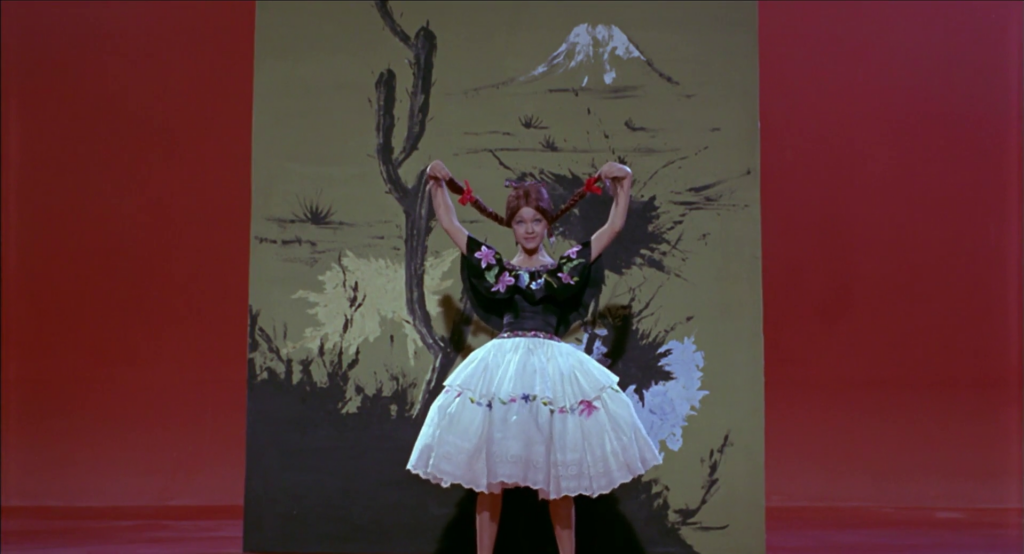
Marisol rumbo a Río (Fernando Palacios, 1963)
In academic publications, posthumous appreciations of professors and scholars tend to include a list of professional accomplishments that highlight publications (using adjectives like key, foundational, innovative and influential) and show an expectation of fearlessness in the field, paradigm shifts and development of new theoretical concepts. By those standards I suppose the contributions of Tatjana Pavlovic to film studies may seem modest. In 2003 Tatjana published her first book, Despotic Bodies and Transgressive Bodies: Spanish Culture from Francisco Franco to Jesús Franco, a panoramic analysis of 20th Century Spanish culture structured around important dates in Spanish history and the juxtaposition of different bodies (political, literary, cinematic). The book develops her dissertation project, defended in 1996 at the University of Washington (in that version the body was “nymphomaniac” rather than “transgressive”). Tatjana later collaborated with five students and friends from Tulane in the writing of a textbook (100 Years of Spanish Cinema, 2009), wrote another cultural studies book about the Spanish transformation between the 1950s and 60s (The Mobile Nation: España cambia de piel (1954-1964), 2011) and co-edited with Jo Labanyi an anthology of essays by some of the best scholars of Spanish cinema (A Companion to Spanish Cinema, 2012). She also published several academic articles, mostly about Spanish cinema, including some about the horror films of the infamous exploitation director Jesús “Jess” Franco.
Maybe it isn’t much, numerically speaking. However, Tatjana Pavlovic was a beloved professor at Tulane University for over twenty years and the brief appreciations collected in this homage (written mostly in Spanish by choice of the authors) are a sample of a legacy that transcends the ability to shift critical paradigms and to accumulate scholarly publications. Felipe Victoriano evokes Tatjana during her early years at Tulane until the year of Hurricane Katrina and Maureen Shea takes us from her job interview to her love of dogs up until her dealings with cancer. Rosana Blanco-Cano remembers Tatjana’s guidance during important moments in her life and Gabriela Aleman highlights her way of looking at the world. Camilo Gomides also singles out Tatjana’s gaze while evoking a trip to Croatia and Alejandra Sánchez addresses her directly through epistolary form. The collages by Alejandra Osorio Olave that accompany some of the pieces ingeniously reference historical and pop icons associated with Tatjana’s tastes and scholarship.
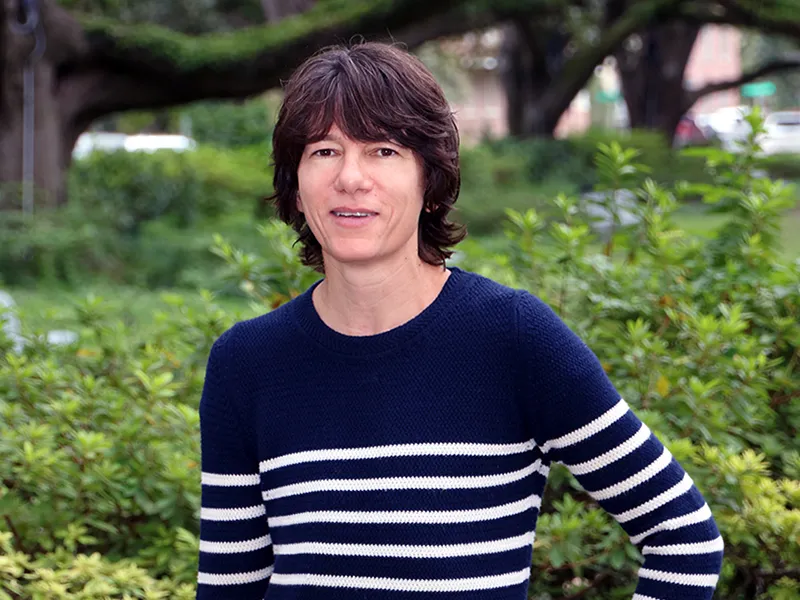
Photo via Department of Spanish & Portuguese
As for me, years after our meetings at the coffee shop, Tatjana convinced me to resume writing about cinema after I had thrown in the towel. Her help, with the complicity of Ana López (co-organizer with Tatjana of the academic conference “Geographical Imaginaries”, 2009), allowed me for years to have an institutional credential and access to a university library. For that reason I remember Tatjana whenever I sit down to continue my research and attempt to write.
I remember that someone once asked Ana López, another Tulane professor who passed away from cancer, why she had not published her book yet and she, with drink in hand, casually responded: “life happens”. Life has happened, a year has passed since Tatjana parted and it has been months since I first thought of putting this together. In these times that demand more speed from us, this unexpectedly prolonged, pending conversation and the revision of the texts about Tatjana have reminded me that life, memories and writing often flow in unexpected ways. I have taken the liberty to accompany the different pieces with screenshots of the films of Pedro Almodóvar (a recurrent reference) and other filmmakers that Tatjana Pavlovic wrote about in her books and articles. It is a playful relationship between text and images that evokes Tatjana’s strategy of juxtaposing bodies in her first book.
*Roberto Carlos Ortiz is an independent scholar and writer.