
Tatiana
*By Maureen Shea
Masthead image: La ley del deseo (Pedro Almodóvar, 1987)
In 2000, I was sitting in the Chair’s office in the Department of Spanish and Portuguese at Tulane University, when a tall, dark haired, slim woman, wearing dark slacks and a long-sleeved shirt, entered and introduced herself as Tatiana Pavlovic, a candidate for a 20th century Spanish film position. We began a long conversation about our Croatian roots–we found out that my mother’s hometown of Fazana on the Adriatic Sea was about 200 miles from Zagreb, Tatiana’s origin. We were both thrilled to have a colleague with a Croatian background! Then we talked about basketball, since she initially came to the United States on a basketball scholarship, and I told her what it was like living in the vibrant, music scene of New Orleans. Other non-academic subjects kept coming up until we realized her time was almost up, so I quickly filled her in on her schedule for that day. She would introduce me as the person who hired her but really it was the whole Dept.; she charmed us all and the outcome was a foregone conclusion–despite missing a page and losing her place for a few minutes, while giving her job talk!
Although we became friends almost immediately after she was hired, our friendship really blossomed when she adopted Wolfy, a German Shepherd stray she found wandering around City Park. She knew of my history with German Shepherds and sought my advice. Tatiana had a certain innocence when confronted with something distinctive; she was in awe of how smart, loyal, perceptive and dedicated German Shepherds are. I felt she thought of them as kindred spirits, requiring time alone but also in need of companionship. To her, and me, they are regal creatures, as well as playful and funny. We shared many a laugh at our German Shepherd antics. Wolfy was followed by golden haired, Heidi (nicknamed Haska); at 5 years old she was set in her ways and considered the couch her domain. Ever the disciplinarian, Tatiana was determined to break that habit and tried all kinds of tricks to keep Haska off the couch, including piling furniture on top of it. That time, when she returned, Haska had somehow shoved enough obstacles off to curl up in a corner. It took a while, but Tatiana finally realized she had met her match, and Haska got her own couch. After Haska, came the one-eyed Belgium Shepherd, Daska who had been left at the SPCA, and finally, Vera, a beautiful black and tan she adopted with her partner, Anne. Along with other dogs and dog friends, we would wander all over City Park in New Orleans. Tatiana also loved to take long walks through the city at night, protected from trouble by her GSH companion. She would stop to chit-chat with friends along the route.
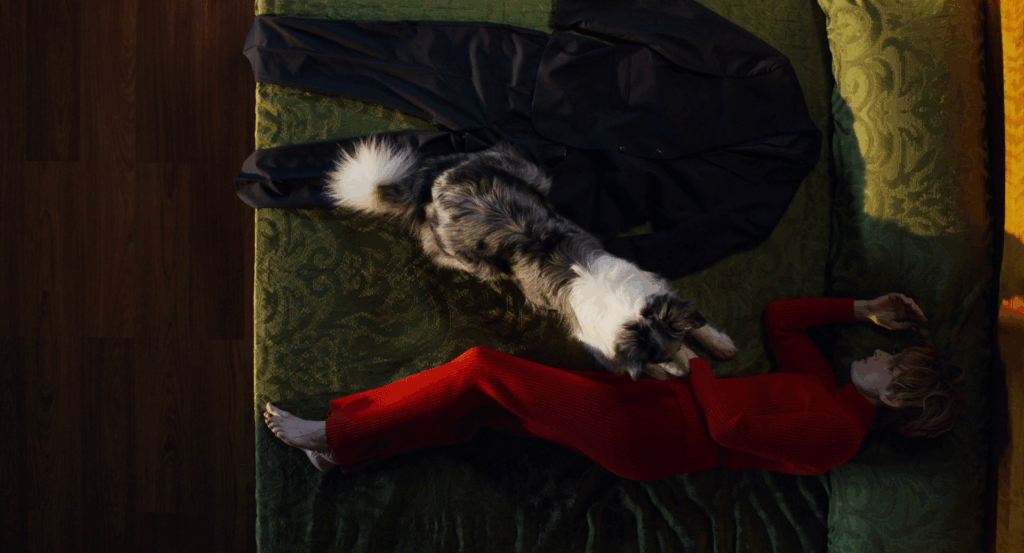
The Human Voice (Pedro Almodovar, 2020)
Tatiana was dedicated to her vast network of family and friends and loved making connections. So many people who would otherwise have never known each other met through Tatiana. She was always introducing people from different walks of life who also became friends with each other. Whenever one had a question about a health care specialist, handyman, stray animal, technical computer questions, etc., Tatiana knew someone who could help. She was a fan of the noontime beer, and she and I drank many brewskies together, sampling different drafts in bars around New Orleans, IPA being another one of her passions, while we discussed life. Often, she taught the Spanish counterpart to the Latin American literature courses I taught, such as Women Writers of Spain or Latin America, or Gender and Sexuality, and we shared our ideas. Her classes were packed, with long waiting lists, because students loved her. Despite her busy schedule, she was extremely disciplined, and made time for research. Her brilliant writing on contemporary Spanish film and the renowned Spanish filmmaker, Almodóvar, propelled her into becoming a Full Professor in record time.
Tatiana was also one of those unique people who was completely comfortable with herself. Rarely did she have any self-doubt or second guess herself. She would stick to her schedule, including a non-negotiable afternoon siesta and visits with her friends. Her time with her son, Tin, and her trips home to Croatia, while also stopping in other European cities to visit friends, were part of who she was. Conversations with Tatiana were always profound, because she was so smart, perceptive and interested in others. That’s what I miss the most, hearing her distinctive voice with the Croatian accent as we discussed our personal dilemmas over beers. I knew Tatiana would listen and come up with some sound advice for me and anyone who sought her out. Because she cared.
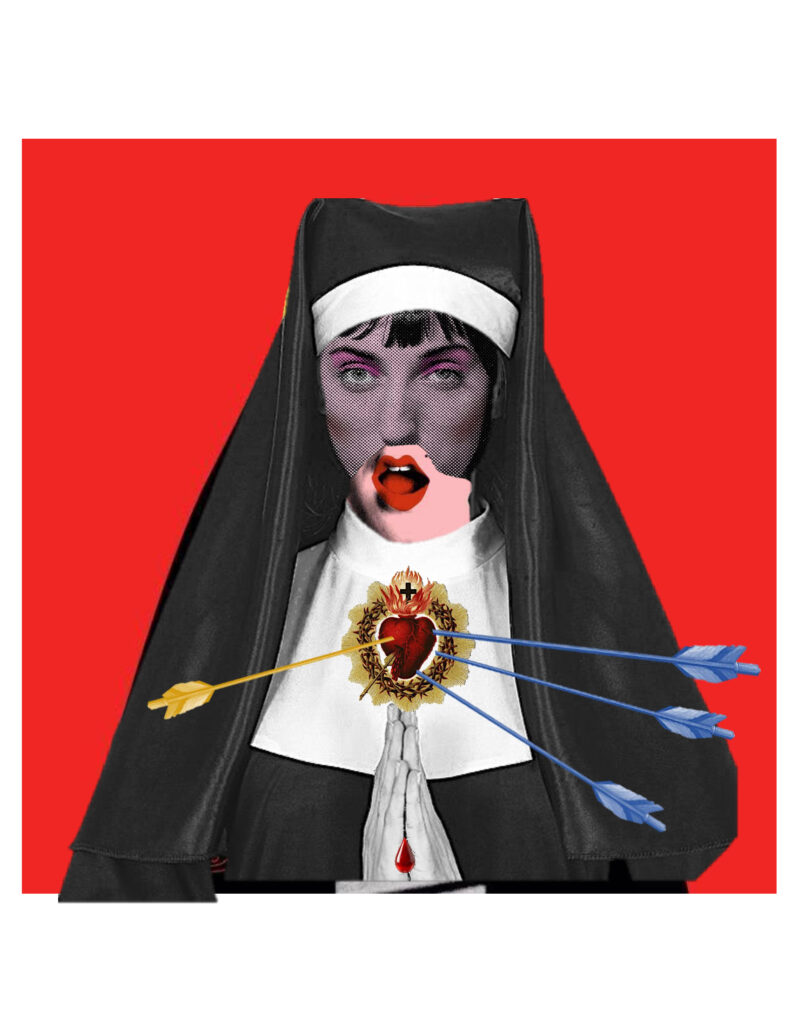
Tati 3 (collage by Alejandra Osorio Olave, 2025)
But what impressed me the most was her optimism and her resilient nature, even when times were tough. When she was diagnosed with cancer, she faced it courageously, deciding on double mastectomies to minimize future risks. She passed the 5-year mark and we celebrated with beers. But the cancer reappeared on her neck/spine, and it was inoperable. Even then, with some lapses, Tatiana kept up her good spirits. I think that, as the narrator in Niall Williams’ This is Happiness ponders about his situation, “we all have to find a story to live by and live inside or we couldn’t endure the certainty of suffering”. Tatiana was living in her own story, unshakable and constant, and she refused to deviate from it; even when she was wearing a back brace and using a walker, she would continue her long, nocturnal walks. And she relied on that network of friends she had created who surrounded her with love and caring. We always teased her about her tough communist spirit and at this crucial juncture, it stood her in good stead.
Tatiana fought long and hard, but the disease was unrelenting. In her final months, she sold her condo in New Orleans and moved to a town near Taos, New Mexico, where her partner Anne lived, along with other close friends, so she could have the care and love she needed in her final months. Even then, she kept teaching her classes on Zoom. Her tenacity and courage in the face of the vast unknown is a model for all of us. And although she triumphed over many battles for survival, in the end, she lost the war. In Guatemala they have a saying about someone who dies before their time: “Se nos adelantó”, she went ahead (of us), with the implication that we are all destined for that same path eventually.
This little earth is dimmer without you, Tatiana, but your spirit lives on in the many lives you touched, and we will never forget you.
*Maureen Shea is Associate Professor Emerita of Spanish at Tulane University
Return to Cencerros (en Recuerdo de Tatjana)